The Lilium guide

Villa Torlonia park, Casina delle Civette and museum

A free park and the Liberty of its stained glass — a short walk from the hotel on Via Nomentana

Less than a twenty-minute walk from the Lilium, heading up Via Nomentana, a garden opens up that many Romans use as their neighbourhood park and that few tourists imagine: Villa Torlonia. You enter for free, sit in the shade of the pines, and then — if you like — you discover the Casina delle Civette, a small Liberty jewel of stained glass and fantasy. The very language of our hotel.

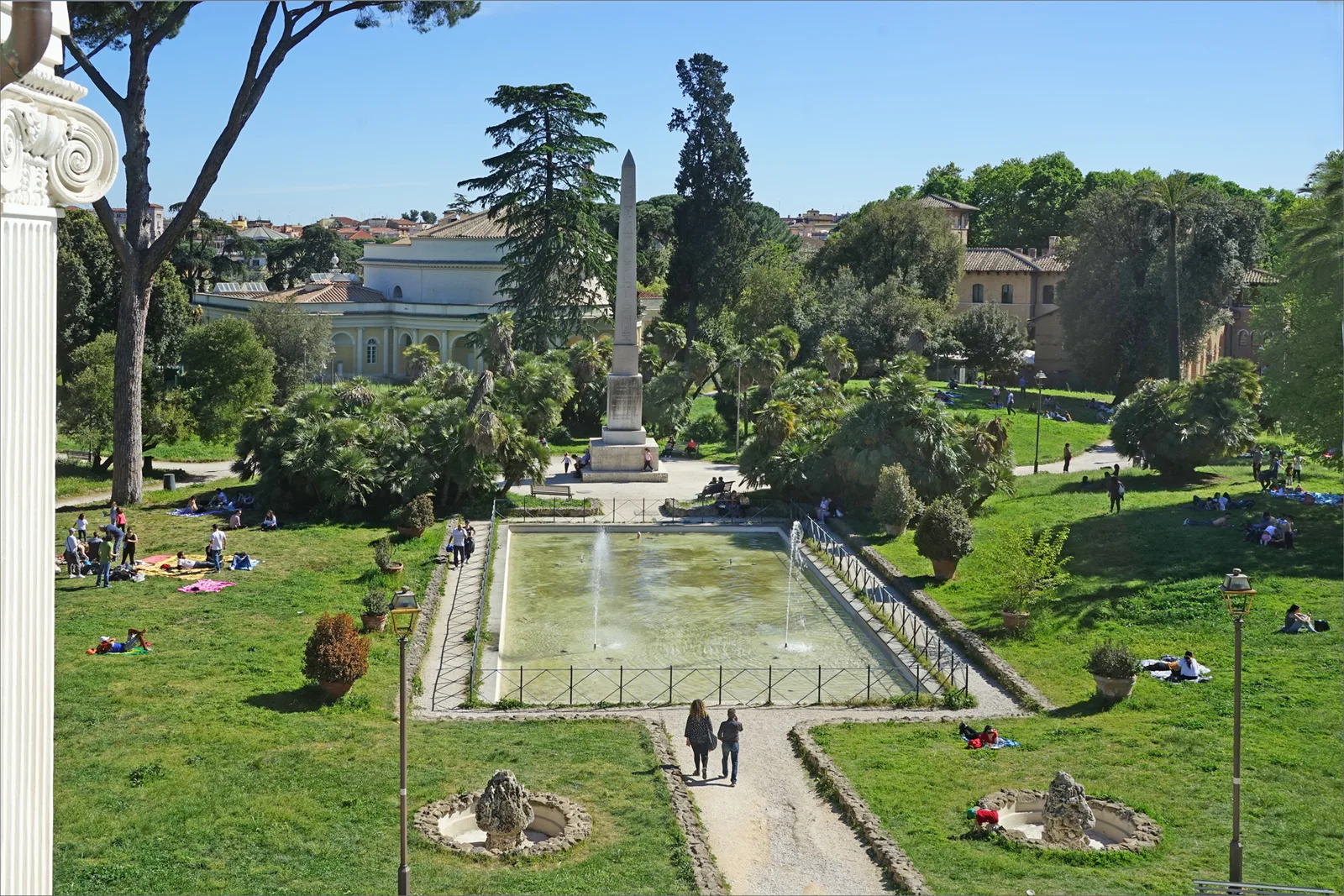
The park of Villa Torlonia in Rome, with its avenues and greenery in front of the Casino Nobile

Photo: Jean-Pierre Dalbéra / Wikimedia Commons (CC BY 2.0)

Free to enter

The park, open to all

The loveliest thing about Villa Torlonia is that it begins without a ticket. Since 1978 it has been a public park, open every day from dawn to dusk: you enter through the gate on Via Nomentana 70 and find yourself in one of the most scenic historic gardens in Rome, far from the crowds of the centre.

It was the estate of the Torlonia family, bankers who in the nineteenth century turned it into an English-style park dotted with follies: tree-lined avenues, century-old stone pines, an obelisk, mock ruins, a Moorish greenhouse, pavilions hidden among the hedges. Today it is the right place for a slow stroll, a book on a bench or a pause before heading back to the hotel.

It is an attraction that costs you nothing and that is worth, on its own, a quarter of an hour's detour. Then, when you are ready, you only have to step into one of the buildings to change register completely.
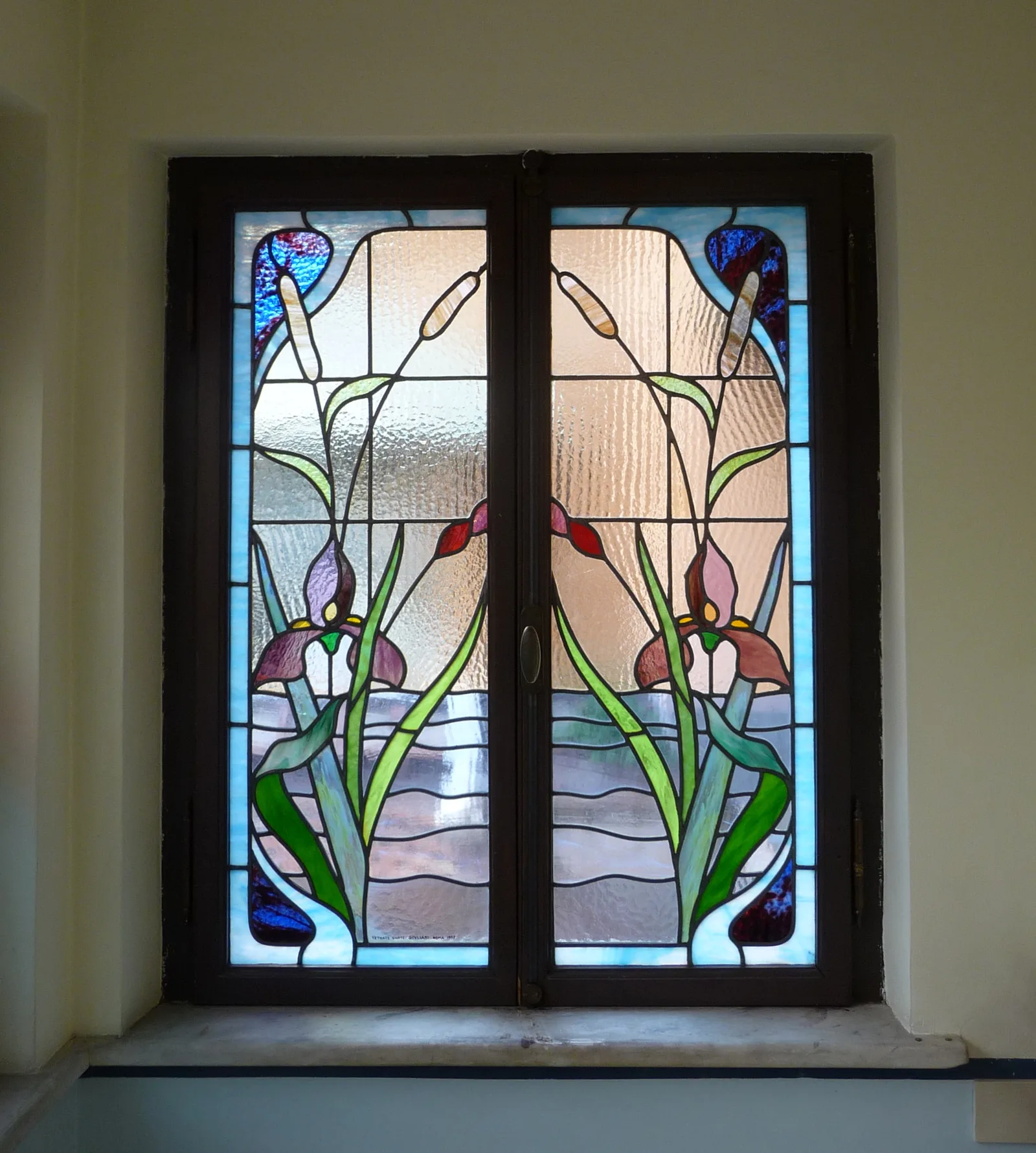
Liberty-style stained-glass window with owls at the Casina delle Civette in Villa Torlonia, Rome

Photo: Warburg / Wikimedia Commons (CC BY-SA 3.0)

The Liberty heart of the villa

The Casina delle Civette

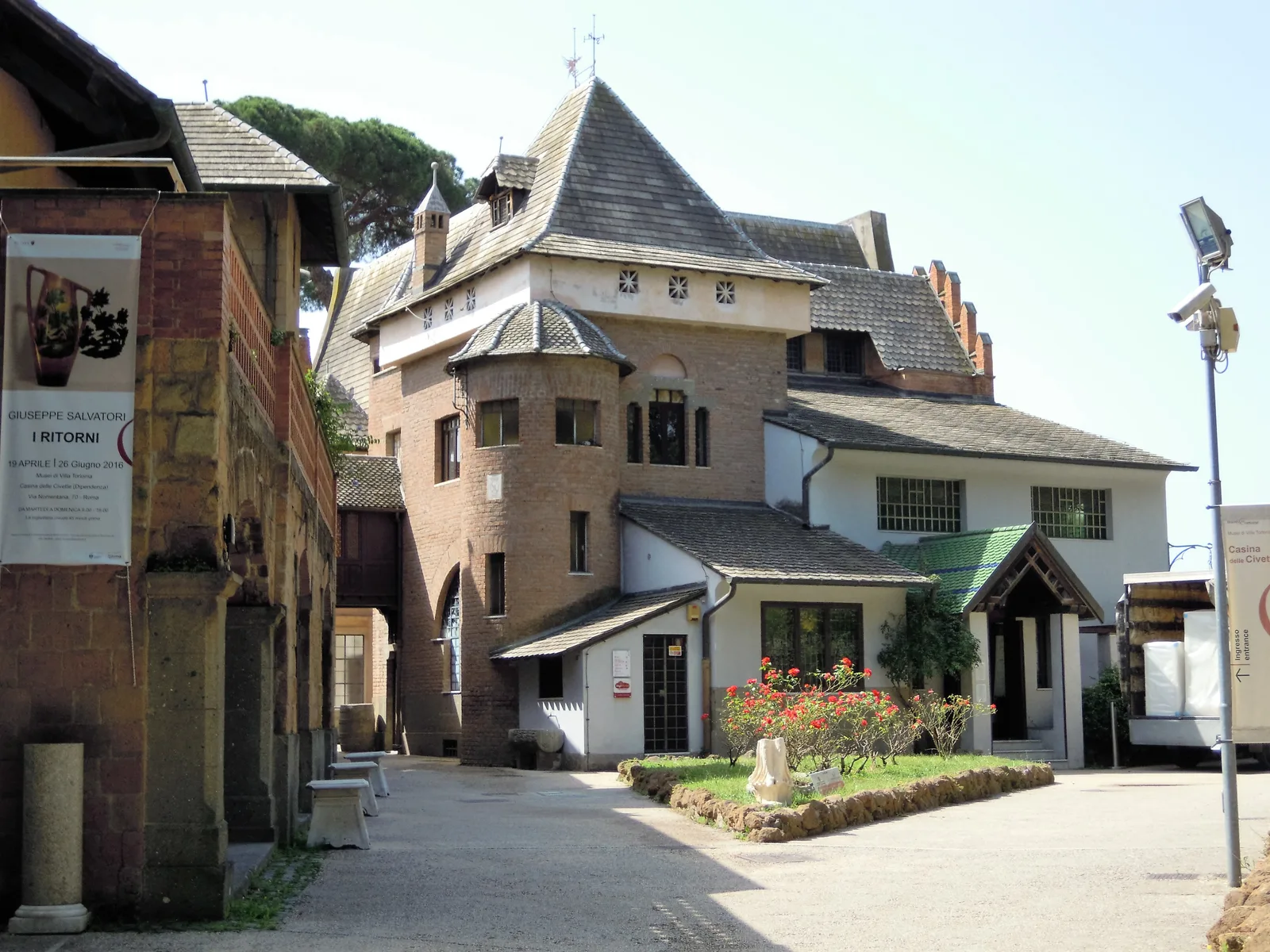
Hidden among the trees is the Casina delle Civette, the most romantic pavilion of Villa Torlonia and the reason why, here at the Lilium, we recommend it to everyone. Born as a "Swiss cabin", between the early twentieth century and the 1920s it was transformed into a small manifesto of Italian Liberty — our version of Art Nouveau. Its name comes from the owl (civetta in Italian), which returns everywhere: in the ironwork, in the majolica, and above all in the stained glass.

It is precisely the artistic stained glass that makes it unique. It was made by the master glassmaker Cesare Picchiarini from designs by Duilio Cambellotti and other artists: owls, peacocks, roses, fairies and floral tendrils in coloured glass, which filter the light and set the rooms aglow. Today the Casina is a museum of itself, dedicated to Liberty stained glass.

For us it is a family visit: the same flower, the same curve, the same worked glass that inspire the interiors of the Lilium. Walking here is like leafing through the book from which our style is born.

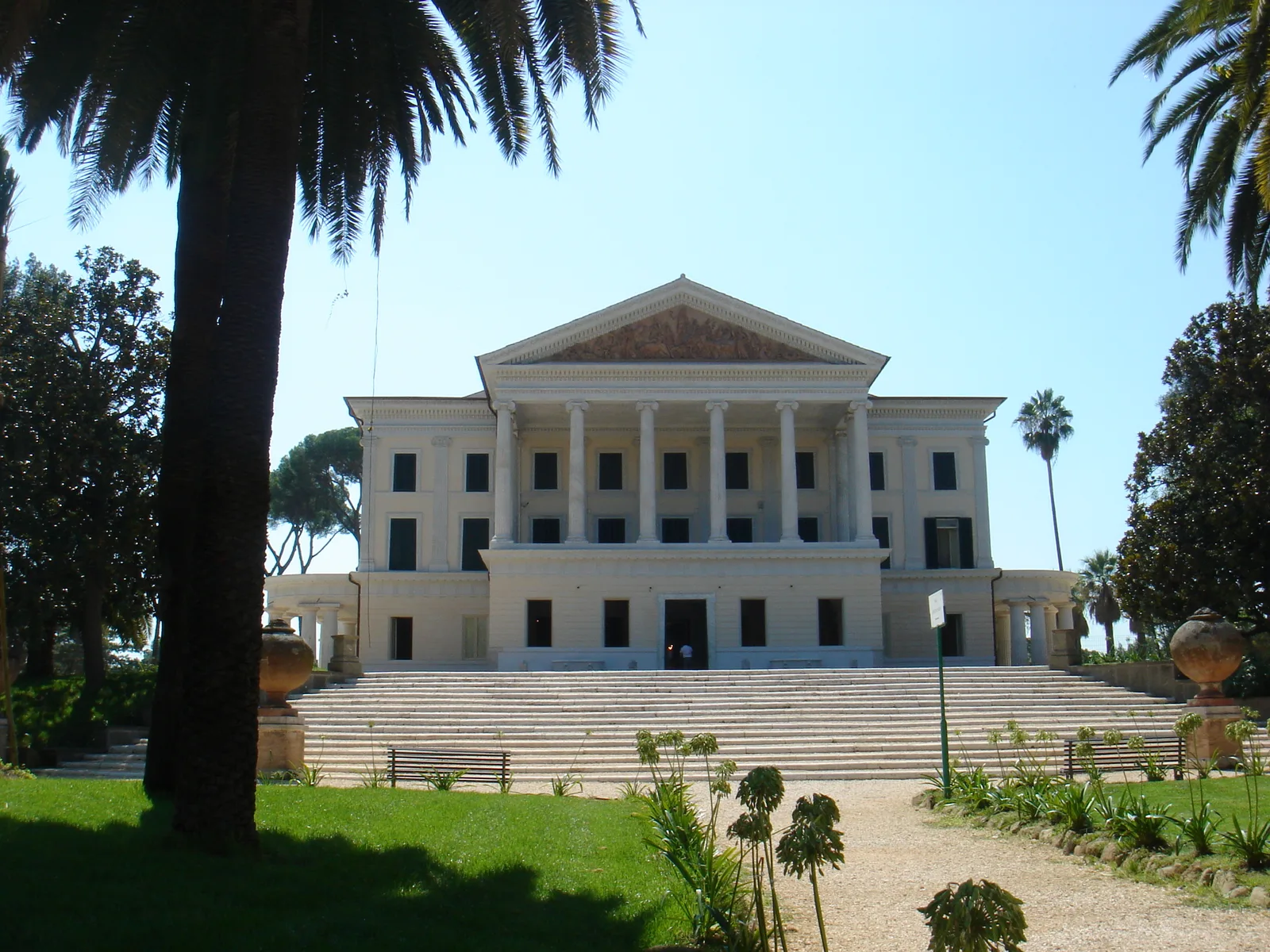
Neoclassical façade of the Casino Nobile of Villa Torlonia, today a museum, in Rome

Photo: Lalupa / Wikimedia Commons (CC BY-SA 3.0)

The main building

The Casino Nobile and its history

The largest building of the estate is the Casino Nobile, the neoclassical residence of the Torlonia family, with its frescoed halls and its colonnaded façade. It has, however, a chapter of history that makes it unmistakable: from 1925 until its fall in 1943 it was the residence of Benito Mussolini, who lived there with his family for a symbolic rent. He left it after 25 July 1943.

Beneath the villa still lie the air-raid shelter and the bunker of those years, which can be visited by reservation: a stark interlude within so much elegance. Today the Casino Nobile is a museum — the Museo della Villa, with furnishings, sculptures and the collection of the Scuola Romana — and is visited with a ticket.

The fares of Rome's civic museums have changed from 2026 and include single tickets and a combined one for the three buildings. Before you go, it is worth a quick check on museivillatorlonia.it or at our reception: up-to-date hours and prices, with no surprises.

The villa's three stops

What to see, in three stops

Free access

The park

A public park since 1978, open every day from dawn to dusk. Century-old pines, avenues, the obelisk and the mock ruins of nineteenth-century Rome. It is free: the simplest — and loveliest — part of the visit.

Museum · Liberty

Casina delle Civette

The Liberty pavilion with the celebrated artistic stained glass by Cesare Picchiarini from cartoons by Duilio Cambellotti: owls, peacocks and flowers in coloured glass. The natural bridge to the Lilium's style.

Museum · History

Casino Nobile

The neoclassical residence of the Torlonia family, Mussolini's home from 1925 to 1943, with a bunker that can be visited by reservation. Today it houses the Museo della Villa and the Scuola Romana collection.

How to get there from the Lilium

From the hotel to Villa Torlonia

approx. 18–20 min·Flat

On foot, along Via Nomentana

From the hotel on Via Venti Settembre you reach Porta Pia and take Via Nomentana, the elegant tree-lined avenue of the northern quadrant. In just under twenty minutes, almost entirely on the flat, you arrive at the gate of Villa Torlonia at number 70. It is the same axis that, continuing on, leads to the Coppedè district.

a few minutes·Bus or taxi

In a few minutes on four wheels

If you prefer, from the stops on Via Nomentana several bus lines head up towards Villa Torlonia in a few minutes, and a taxi from the hotel takes just as little time. The reception is always on hand to point you to the right stop or call you a car.

Frequently asked questions

Questions about Villa Torlonia

How much does it cost to enter Villa Torlonia in Rome?

Entry to the park of Villa Torlonia is free: it is a public park open every day from dawn to dusk. The three museums inside — the Casina delle Civette, the Casino Nobile and the Casino dei Principi — are instead ticketed, with single tickets and a combined ticket. The fares of Rome's civic museums were updated from 2026: it is best to check prices and free admissions on the official site museivillatorlonia.it before your visit.

What are the opening hours of the Casina delle Civette?

The Casina delle Civette, like the Casino Nobile and the Casino dei Principi, is generally open Tuesday to Sunday, from 9:00 to 19:00, closed on Mondays, 1 May and 25 December. Hours may vary for exhibitions or particular periods: always check on museivillatorlonia.it or by calling the number 060608.

Why is the Casina delle Civette in Liberty style?

The Casina delle Civette is the most romantic pavilion of Villa Torlonia: between the early twentieth century and the 1920s it was transformed into a small manifesto of Italian Liberty, the home-grown version of Art Nouveau. The recurring motif is the owl — civetta in Italian, from which the name comes — echoed in the celebrated artistic stained glass, made by the master glassmaker Cesare Picchiarini from designs by Duilio Cambellotti and other artists. It is the same aesthetic family that inspires the interiors of Lilium Boutique Hotel.

Did Mussolini really live at Villa Torlonia?

Yes. The Casino Nobile of Villa Torlonia was the residence of Benito Mussolini from 1925 until his fall in 1943: the Torlonia family granted him the house for a symbolic rent. Mussolini left it after 25 July 1943. A shelter and an air-raid bunker were also built beneath the villa, which can be visited by reservation. Today the Casino Nobile is a museum.

How far is Villa Torlonia from Lilium Boutique Hotel?

Villa Torlonia is at Via Nomentana 70, along the same axis as Lilium Boutique Hotel. From the hotel, on Via Venti Settembre near Porta Pia, you reach the entrance in about eighteen to twenty minutes on foot, heading up Via Nomentana. It is the same walk that, continuing on, leads to the Coppedè district.

The same Liberty, from within

Sleep in Liberty-style Rome

The stained glass of the Casina delle Civette speaks the same language as our interiors. Stay at Lilium Boutique Hotel — fourteen rooms, one flower each — a twenty-minute walk from Villa Torlonia.

Direct booking Save up to 10%