The Lilium guide

What to see near Porta Pia

The neighbourhood, the monuments, the secrets — all on foot from the hotel

The hotel sits at Via Venti Settembre 58/A — literally steps from Porta Pia. Which means you have at your disposal one of Rome's richest and least crowded quarters, almost entirely explorable on foot, without ever hailing a cab.

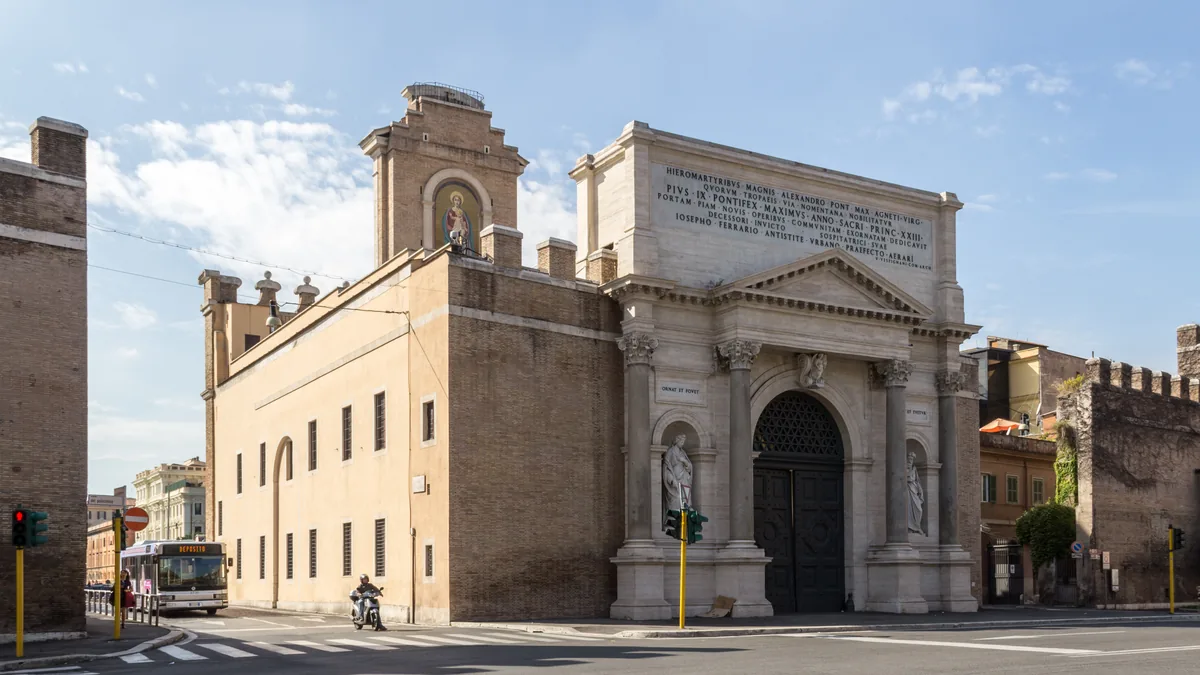
Porta Pia, Michelangelo's last architectural work, Rome

At the end of our street

Porta Pia and Via XX Settembre

Porta Pia is Michelangelo's final architectural work: commissioned by Pope Pius IV around 1561, the gate was left unfinished at the master's death and completed by other architects. But it is 20 September 1870 that sealed Porta Pia's place in history — the Breach, the gap opened by the artillery of the Royal Italian Army in the Aurelian Walls, marked the capture of Rome and the completion of Italian unification.

Attached to the gate, the Historic Museum of the Bersaglieri preserves memorabilia, uniforms, banners and documents of the famed corps — founded in 1836 and the force that led the assault in 1870. Entry is free, the rooms almost always empty: one of those places tourists never find, yet well worth half an hour.

Via Venti Settembre is the quintessential Umbertine boulevard: built in the second half of the nineteenth century to house the ministries of the new Italian state, it is lined with eclectic late-1800s palazzi that speak the same Liberty language as the hotel. Look at the doorways, the cornices, the wrought-iron details — Rome rarely shows this face to those who linger only in the historic centre.
A few minutes on foot

Bernini and the Moses in stone

The Basilica of Santa Maria della Vittoria, on Via XX Settembre, is one of Rome's most visited churches, thanks to Gian Lorenzo Bernini's Ecstasy of Saint Teresa (1652) in the Cornaro Chapel. The sculpture is considered one of the absolute masterpieces of the Baroque: Teresa of Ávila in mystical rapture, marble transformed into light and movement. Free entry; it is less than ten minutes' walk from the hotel.

A little further on, in Piazza San Bernardo, the Fountain of the Acqua Felice — commonly called the Moses Fountain — is the first great monumental fountain of modern Rome, commissioned by Pope Sixtus V in 1587 to celebrate the arrival of the Acqua Felice aqueduct. The figure of Moses, sculpted by Prospero Bresciano, was harshly criticised at the time: Romans found it disproportionate compared to Michelangelo's original. Today it is simply beautiful, and almost always crowd-free.

Michelangelo, once more

Baths of Diocletian and Santa Maria degli Angeli

The Baths of Diocletian — the largest public baths of Roman antiquity, built between 298 and 306 AD for over three thousand bathers — lie a short walk towards Termini, in Piazza della Repubblica. Part of the complex today houses the Museo Nazionale Romano, with extraordinary epigraphic and sculptural collections.

But the jewel is the Basilica of Santa Maria degli Angeli e dei Martiri: Michelangelo, in 1563, transformed the frigidarium of the baths into a church, preserving the original gigantic Roman vaults. The interior is one of Rome's most awe-inspiring, and the eighteenth-century meridian line traced across the entire nave floor is almost impossible to forget. Free entry.

Termini station is a short walk away — handy for arrivals by train or for reaching the Colosseum, Vatican or the airport shuttle quickly.

The neighbourhood walk

Villa Torlonia and Via Nomentana

Short walk

Villa Torlonia

Mussolini's residence from 1925 to 1943, today a free public park open all day. Three museums in the green: the Casino Nobile, the Casino dei Principi and the Casina delle Civette — the last celebrated for its Art Nouveau stained glass, some of the finest examples of Liberty style in Rome. Park entry free; museums at reduced charge.

Via Nomentana

Sant'Agnese fuori le Mura

The Basilica of Sant'Agnese fuori le Mura preserves one of Rome's most beautiful Early Christian apse mosaics, dating from the 7th century. Beside it, the Mausoleum of Santa Costanza (4th century AD) is one of the best-preserved late-antique structures in the world: the ambulatory vault mosaics are of extraordinary quality — harvest scenes, peacocks, everyday life in gold and coloured tesserae. Admission charged.

Salario district

MACRO — Contemporary Art

The Museum of Contemporary Art of Rome is on Via Nizza, in the Salario quarter, a few minutes from Villa Torlonia. Temporary exhibitions by Italian and international artists, with a frequently changing programme. The museum building, designed by Odile Decq (2010), is itself a work of art. Check hours and prices on the website.

On foot to the centre

From the neighbourhood to the heart of Rome

approx. 20 min·Flat

Towards the Trevi Fountain and the Quirinale

From Porta Pia, head down Via delle Quattro Fontane — with its celebrated late-Mannerist crossing of four corner fountains and the perspective view across three Roman obelisks. Within minutes you reach the Quirinale (official residence of the President of the Republic, with grounds open on scheduled days) and, continuing on, the Trevi Fountain. A history-rich route, almost entirely flat.

approx. 15–20 min·Via Nazionale

Towards Piazza Venezia and the Campidoglio

Via Nazionale links Termini to the historic centre directly and on the flat. Passing Piazza della Repubblica and the Basilica of Santa Maria degli Angeli you arrive at the Altare della Patria, the Campidoglio and the Imperial Fora. The route also passes the Palazzo delle Esposizioni — a flagship exhibition space with a high-level annual cultural programme.

Your starting point

The Lilium as your base

Staying on Via Venti Settembre means having all of this within walking distance — without metro or taxi for the morning's first attractions. Porta Pia is outside the hotel door. Santa Maria della Vittoria is ten minutes away on foot. Villa Torlonia, a leisurely stroll. The Baths of Diocletian, in under a quarter of an hour.

And when you want to venture further — Colosseum, Vatican, Trastevere — the location remains strategic: Termini is close, Via Nazionale is walkable, and the hotel can arrange transfers and private tours on request.

If you'd like to explore the Lilium's rooms before booking, you'll find every room type — from the Economy Single to the Wisteria Room — in the dedicated section. Or book directly: the best guaranteed rate is always on our website.

Lilium Boutique Hotel lobby — Liberty elegance in the heart of Rome

Frequently asked questions

Questions about Porta Pia and surroundings

What is there to see near Porta Pia in Rome?

Near Porta Pia you'll find some of Rome's most extraordinary and least crowded attractions: the Basilica of Santa Maria della Vittoria with Bernini's Ecstasy of Saint Teresa, the Moses Fountain (Acqua Felice), the Historic Museum of the Bersaglieri, Villa Torlonia with the Art Nouveau Casina delle Civette, and the Baths of Diocletian with the Basilica of Santa Maria degli Angeli designed by Michelangelo. Along Via Nomentana: the Basilica of Sant'Agnese fuori le Mura and the Mausoleum of Santa Costanza, with Early Christian mosaics from the 4th–7th century.

Is Porta Pia close to the centre of Rome?

Porta Pia lies in the north-eastern quadrant of Rome's historic centre, roughly twenty minutes' walk from the Trevi Fountain and the Quirinale Palace. From Via XX Settembre you can reach Piazza della Repubblica in a few minutes and then continue on foot towards the historic core along Via Nazionale. The metro station Repubblica (line A) is a short walk away.

Who designed Porta Pia?

Porta Pia was designed by Michelangelo Buonarroti on the commission of Pope Pius IV, around 1561. It is the artist's last architectural work, left unfinished at his death in 1564. The gate is also celebrated because on 20 September 1870, through the Breach opened in the Aurelian Walls nearby, the troops of the Royal Italian Army entered Rome and completed Italian unification.

Your starting point

Porta Pia, outside your door

Stay at Lilium Boutique Hotel and discover this extraordinary quarter of Rome — all on foot, without the crowds.

Direct booking Save up to 10%