
Photo: Alvesgaspar / Wikimedia Commons (CC BY-SA 4.0)
Marble that looks like flesh
The moment fixed in marble
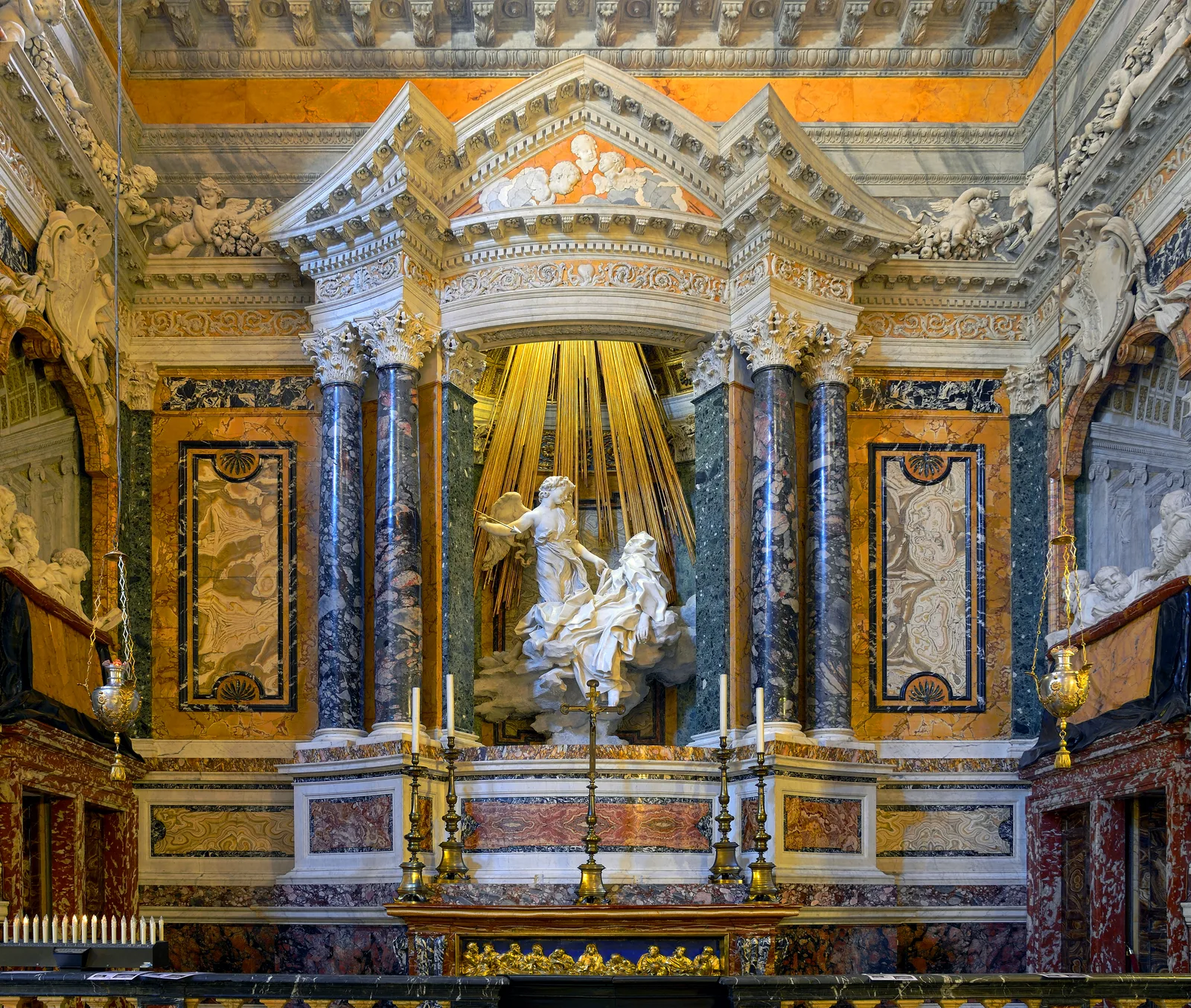
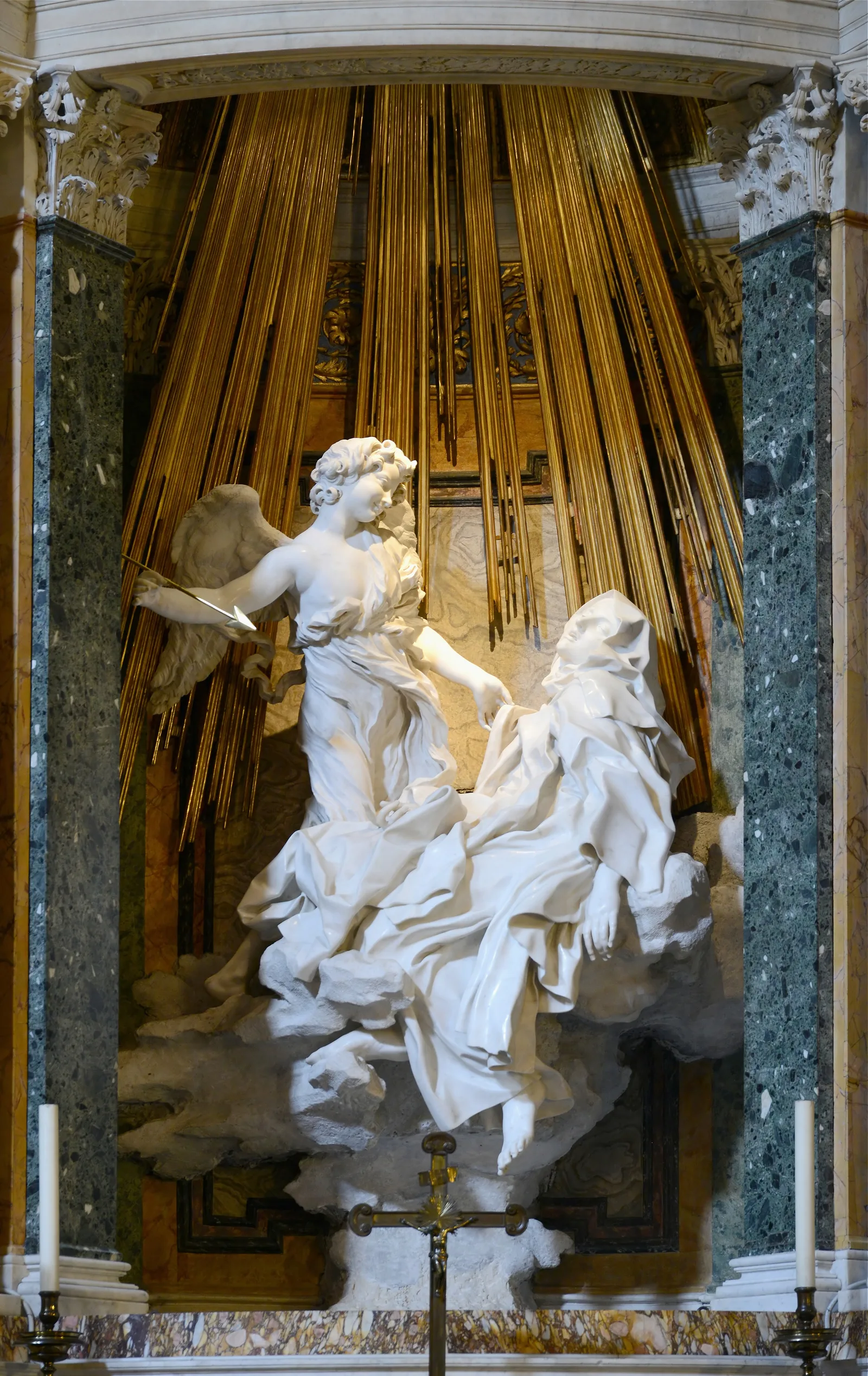
Gian Lorenzo Bernini (1598–1680), the impresario of the Roman Baroque, carved this group in marble between 1647 and 1652. It depicts the Transverberation of Saint Teresa of Ávila: the Spanish mystic, describing her own visions, tells of an angel who repeatedly pierces her heart with a golden dart, in a pain so intense it becomes joy. Bernini freezes exactly that moment.
The saint is sunk back on a cloud, her face tilted, her lips parted, a bare foot dangling in the void. Above her the angel smiles and raises the arrow. The miracle is all in the material: the marble becomes cloth, skin, hair, air. The folds of her habit seem to quiver, as if shaken by an inner wind. It is sculpture, and yet it is almost painting — and almost theatre.
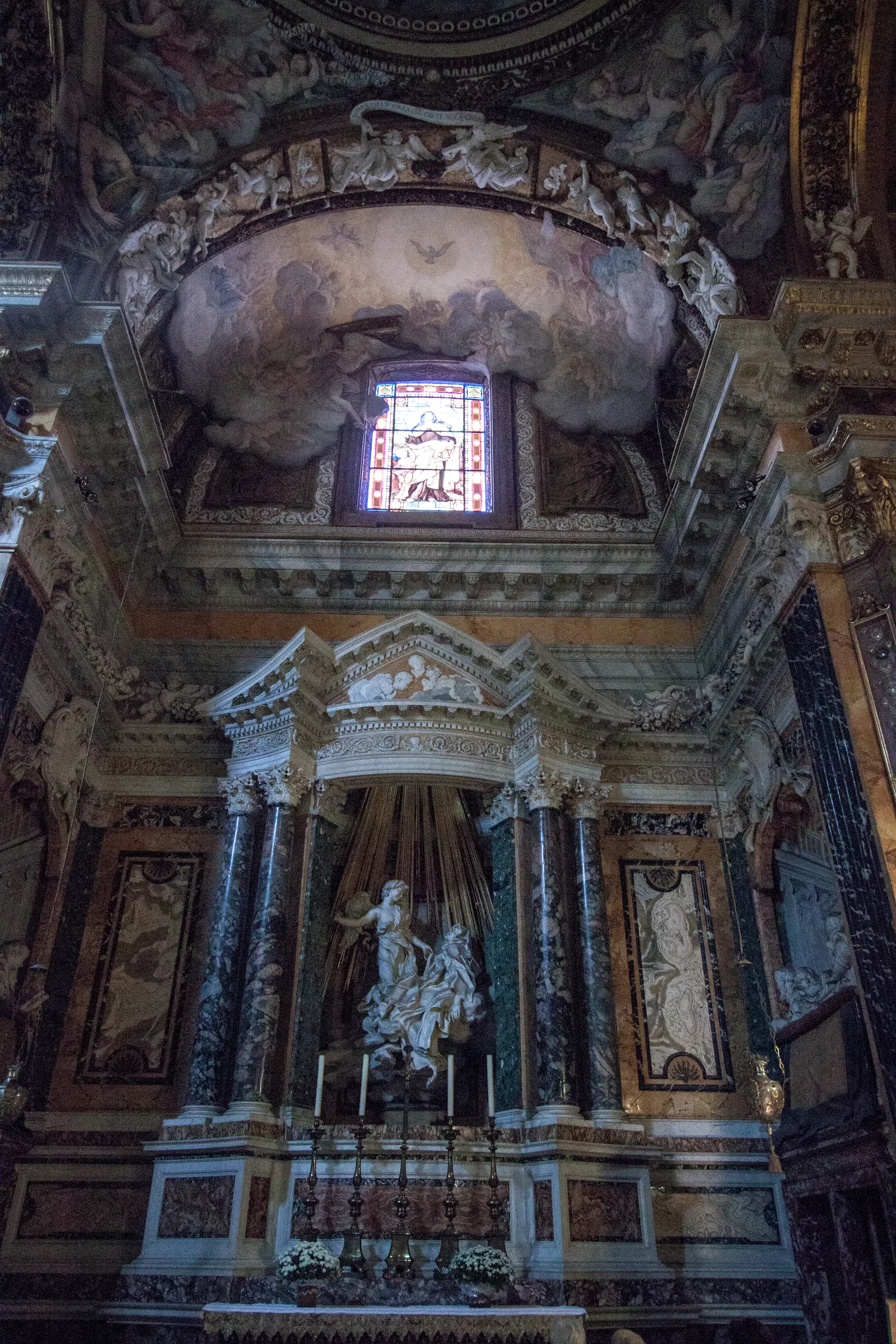
Behind the group, golden rays descend from above. A hidden window, set above the chapel and invisible to onlookers, lets real light rain down on the marble: on the right days the saint seems to glow from within. It is Bernini's stroke of genius — to make natural light perform as if it were part of the work.